Among the many thousands of gold-hungry men who came to California during the years of the Gold Rush, there were men of vision who strode into the Sacramento Valley and saw a future every bit as golden as the Mother Lode Country promised. Such a man was George Washington Gridley. This thoughts may have been diverted from the gold that lay hidden in the mountains to the riches that could be brought forth from the earth that lay before him.
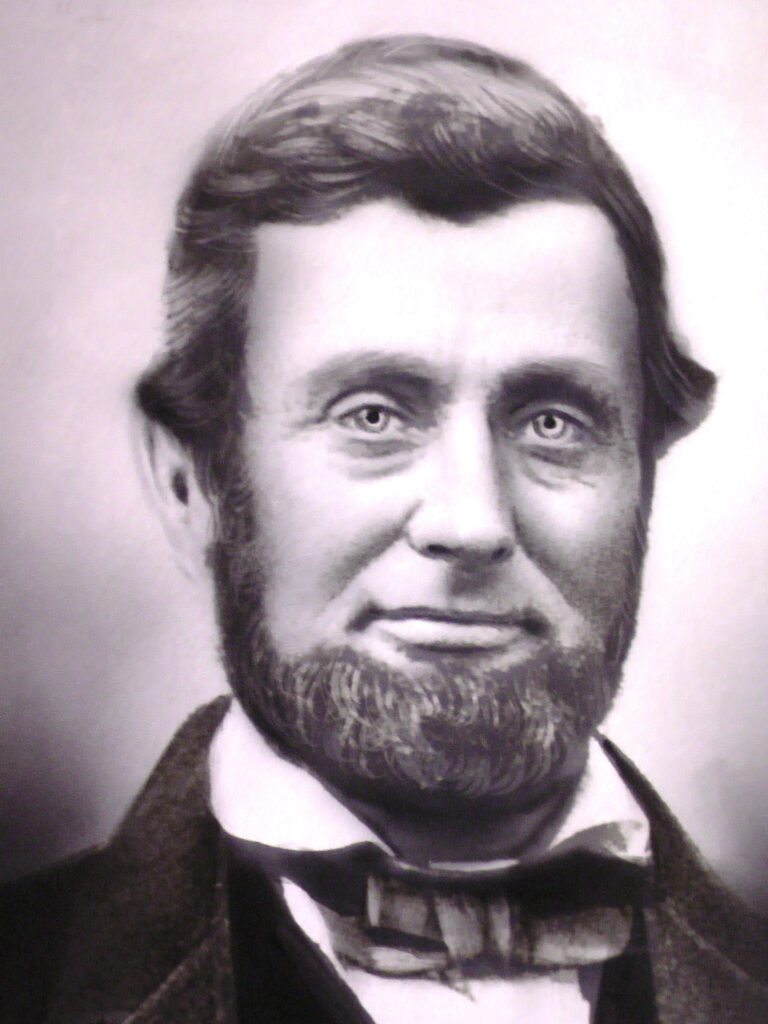
With courage and that vision, he set the stage for the stream of agricultural wealth that has come forth from the valley ever since. Having left his family comfortable in Illinois, Gridley arrived in Sacramento during a Cholera epidemic. Many people contracted the disease, but Gridley, one of the lucky ones, headed north and found the upper valley and his future home.
He returned to Illinois to visit his family in 1852. Not being able to shake the dream of California, he purchased a band of sheep and set out again for the land he would clain as his own. He settled north of the Buttes and established the agriculture empire that was to become his monument.
Within a few years, Gridley became one of the wealthiest and largest landowners in the northern part of the state. With the coming of the California and Oregon Railroad, Gridley had 116,000 head of sheep and 25,000 acres of land. He talked the railroad officials into building a station on the site that was to become Gridley. As added encouragement to the railroad, Gridley erected a huge warehouse nearby in which to store his wool for future shipment.
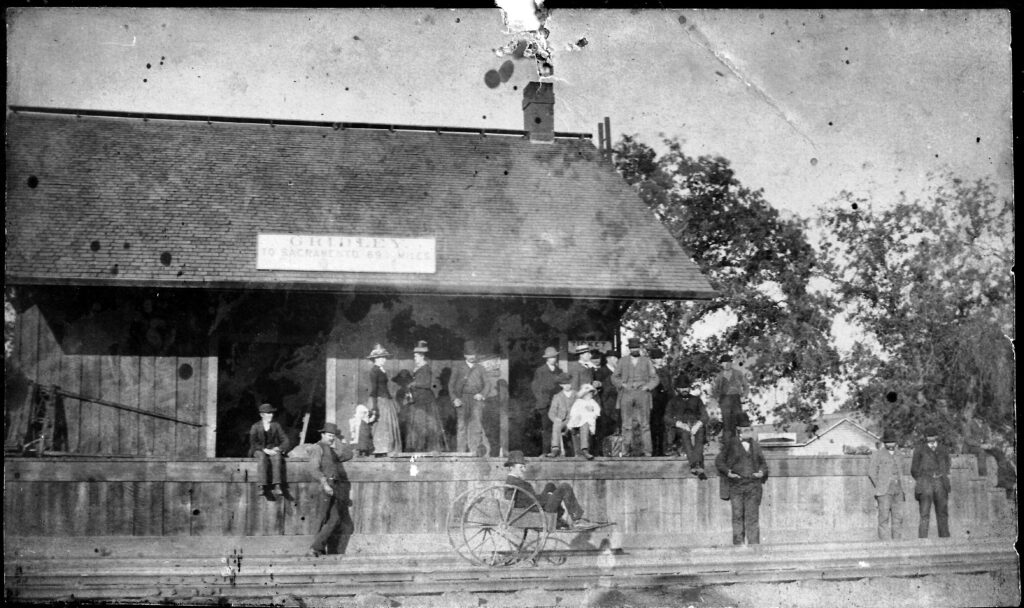
When the railroad surveyor laid out the future town, it became apparent that Gridley should have the opportunity to name the new community. This new town became Gridley Station. Late in the 1870’s, Gridley’s health began to fail, and by early 1881, he was physically and mentally drained. He passed away on March 7, 1881.
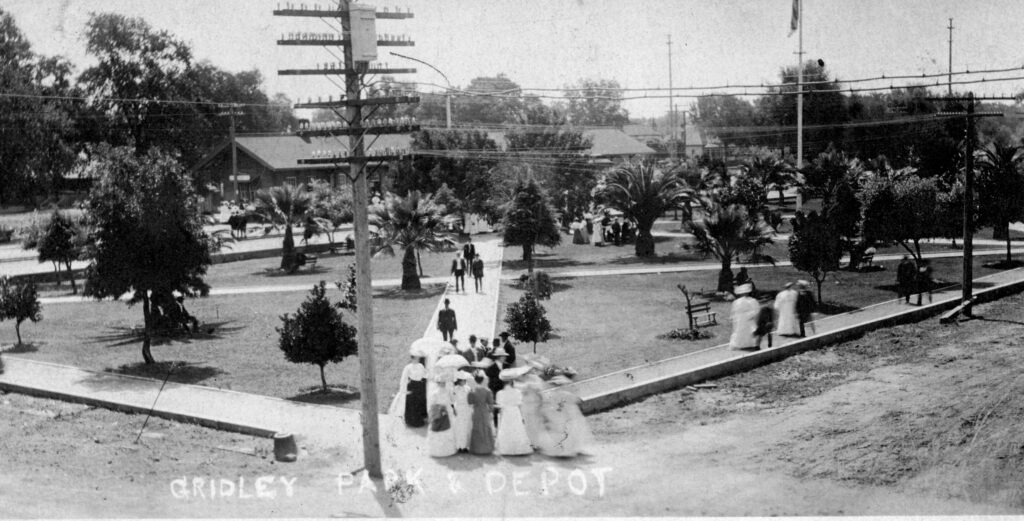
After the many fires that Gridley suffered, the subject of becoming incorporated was discussed. The need to improve fire protection and establish a municipal water distribution system was the principal reason. The discussions started as early as 1891. The only water available came from the fire wells at major intersections, and the equipment was a steam pumper and a hand pumper. These were not effective.
It was William Davis Burleson, the Gridley Herald’s editor, who championed the cause for incorporation. A proposal for a water-distribution system made by Burleson was discussed and approved by many of the property owners and citizens of the community. Edward Biggs, manager of the Rideout Bank’s Gridley branch, had contended that “sooner of later a bonded indebtedness would be fastened upon the town” if it were to incorporate.
Biggs asserted that if a municipal tax were added to the present levies, it would “discourage investment” in the community. Also against incorporation were Dr. Lewis Quentin Thompson and George Wickman. Burleson, Biggs and livery stable owner Charles Henry Block were appointed to a committee to draft bylaws.
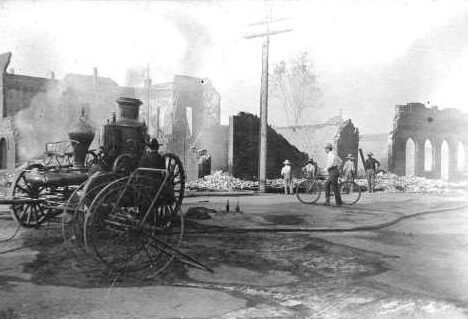
The fire that finally convinced Gridley it should become an incorporated city was discovered about 11:30 p.m. on July 9, 1905, in some outhouses on the alley between Stone’s block of commercial buildings on Virginia Street and Henry Block’s livery stable on Kentucky Street. When the pumps were started, it was discovered the valves did not work, and there was not a drop of water to be had. This allowed the flames to spread. The old 1887 hand pumper was brought out, but its single stream of water was no match for the flames. The steamer was first taken to the corner of Hazel and Virginia Streets where there was a fire as well. In a few minutes, steam was up and the engine started, but it would not pump water.
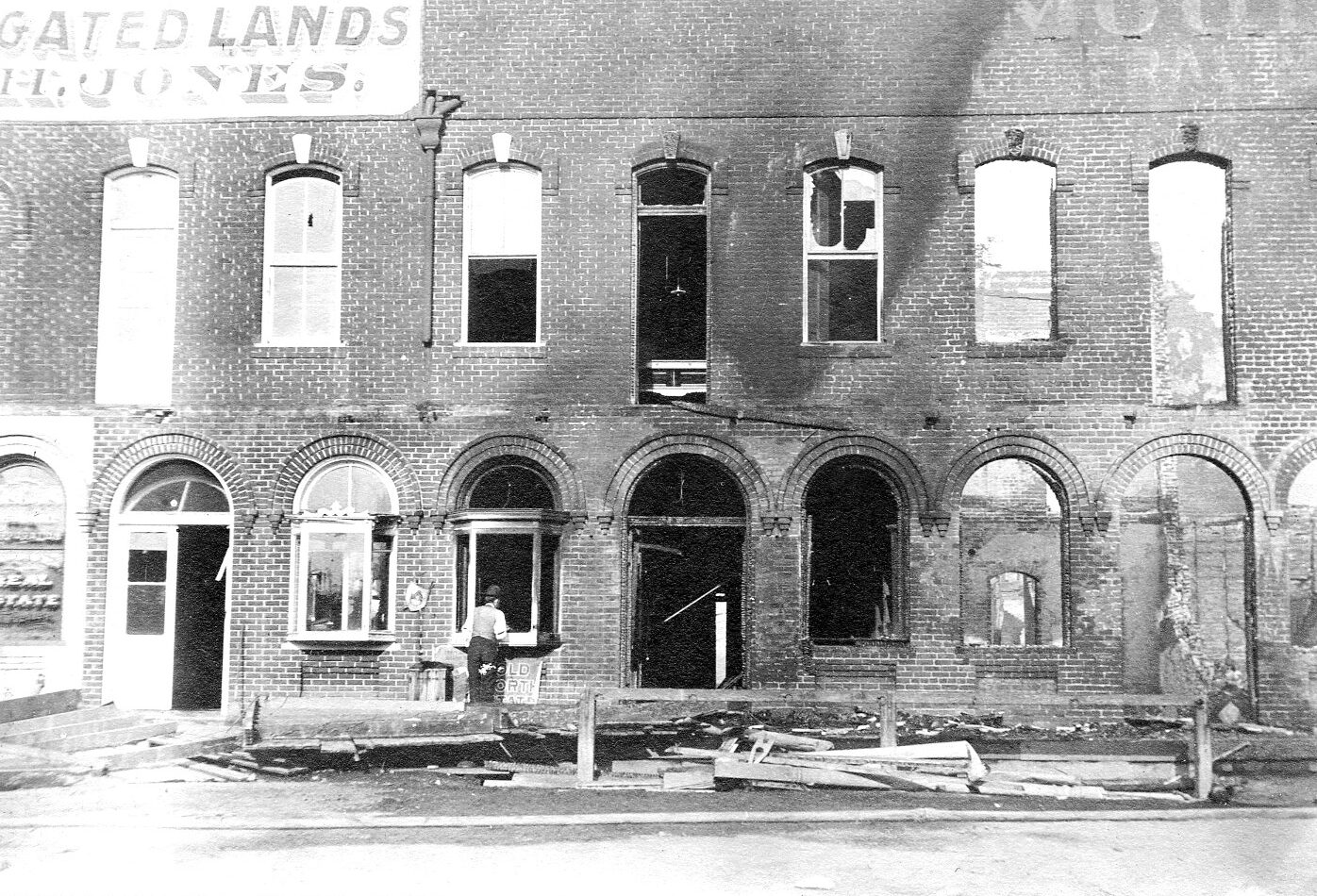
It was reported that the fire could have been extinguished without serious loss had the steamer been in working order. It took 45 minutes to repair it, but by then $100,000 in damage had already been done by the flames. Of this, it was estimated that only $55,350 was covered by insurance. It was then that Burleson urged the residents be allowed to vote on incorporation. “It is a fact,” he said, “that there are a large number of the people of the community who desire to see the town incorporated, and they should be allowed to have an opportunity to express themselves.” Encouraged no doubt by the economic benefit anticipated from completion of the Butte County Canal to Gridley that summer and the coincident subdivision of large land holdings into small farms, the town’s property owners lost no time in preparing to rebuild the burnt-out district.
“Gridley is rising from her ashes,” the Herald proclaimed in headlining a story in its August 25, 1901 issue recounting progress being made. So the town was soon ready to take up the incorporation issue in earnest. A petition asking the board of supervisors to call a special election for a vote the question of incorporation was being circulated and liberally signed.
The names of the signers and the proposed boundaries of the city were published in the Gridley Herald on September 29, 1905, as part of the notice of the hearing on the petition that was to be held before the board of supervisors, William Rutherford of the third district and Edgar Wilson of the fifth district, who objected to the loss of the $3,000 in license fees then being paid to the county by Gridley saloons.
After much discussion, the board of supervisors finally agreed to call a special election on November 16, 1905. Fireman’s Hall was designated as the polling place. At the election, voters approved incorporation of their town as a city by a vote of 83-58.
The first board of trustees elected were Willian Brown, president; Thomas Benning Channon, Henry Block, Edward Fagan, and Joseph Hollis, trustees; Edward Ernest Biggs (manager of the Rideout Bank where the first meeting was held), treasurer; Charles Miller, city marshal; and Fred Moesch, city clerk.
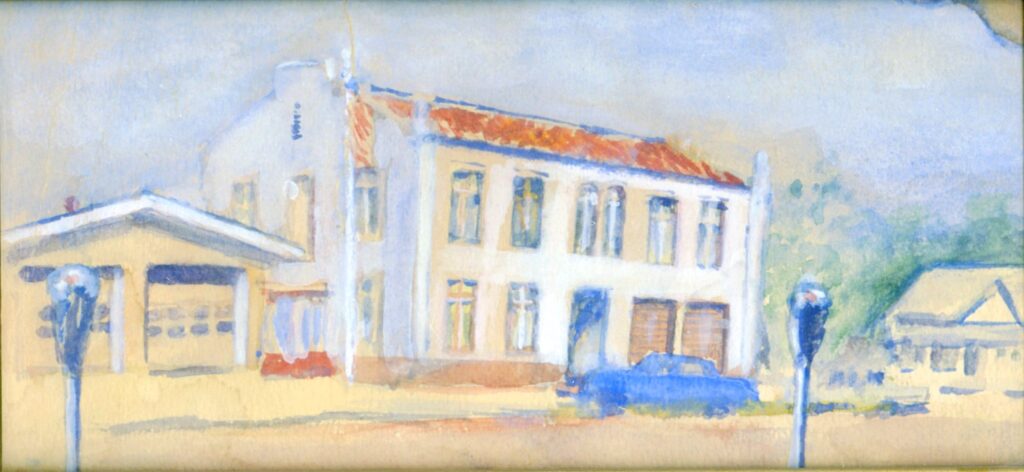
Incorporation did not discourage investment. Buildings added after incorporation include the Gridley State Bank in 1909, the new Rideout Bank in 1910, the Carnegie Library in 1916, city hall in 1925 , and any number of stores and shops that filled in the spaces in the business center of town. Many of the nicer homes had been built on Hazel Street, and others soon followed. The residential areas fanned out and filled the open spaces rather rapidly.
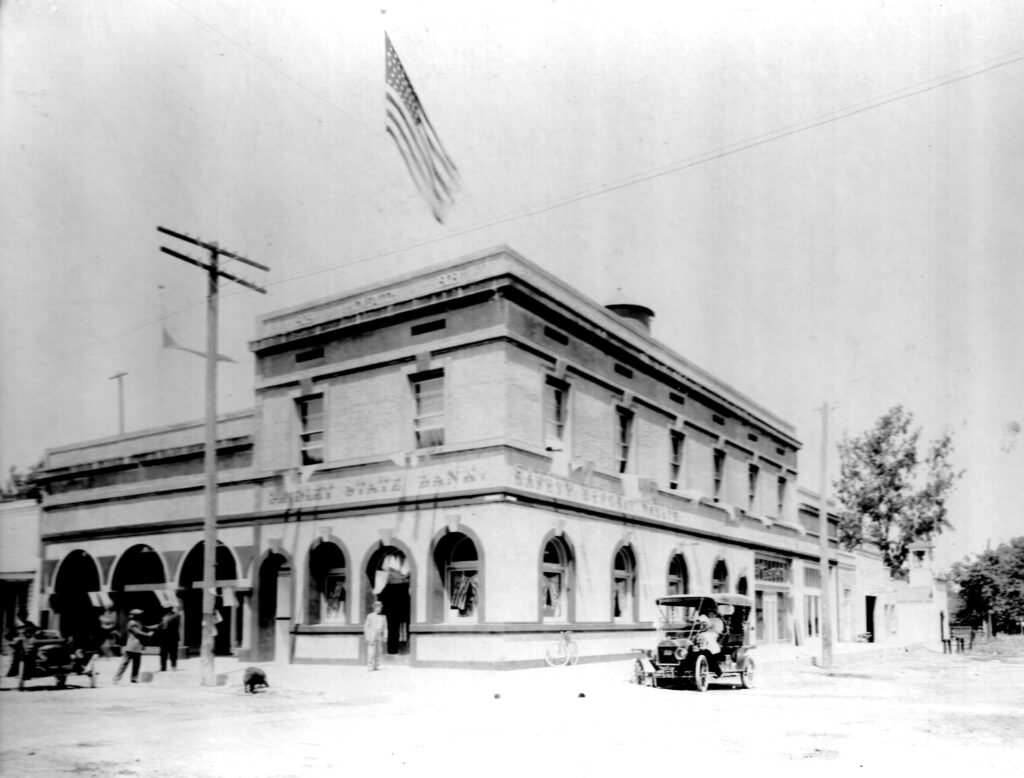
Gridley State Bank
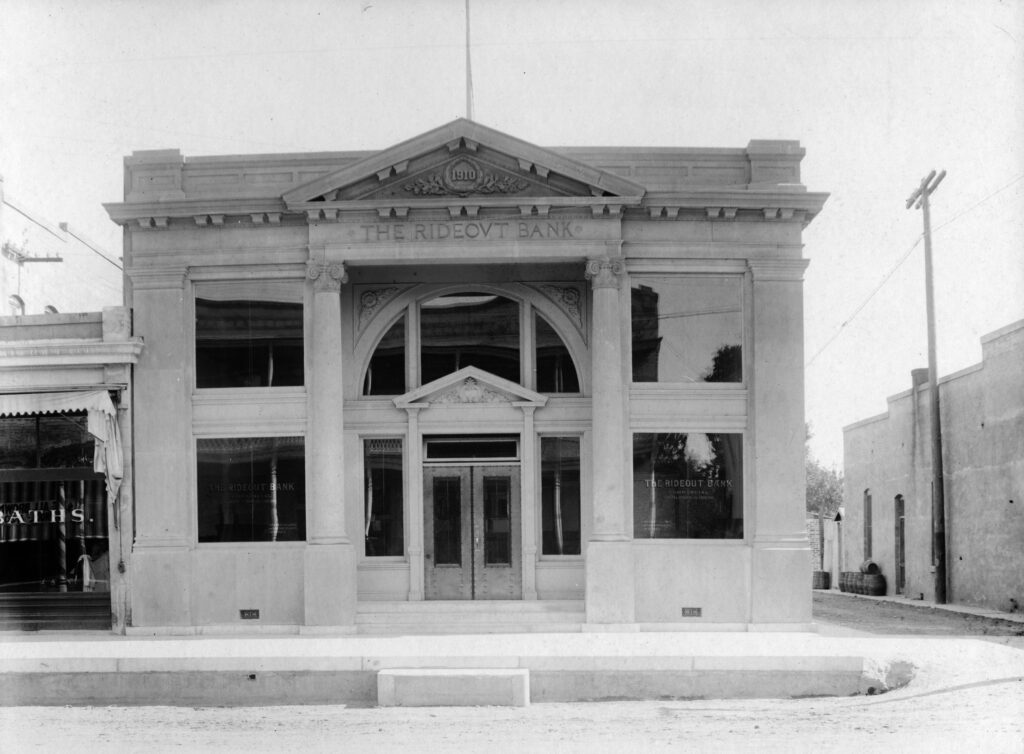
Rideout Bank
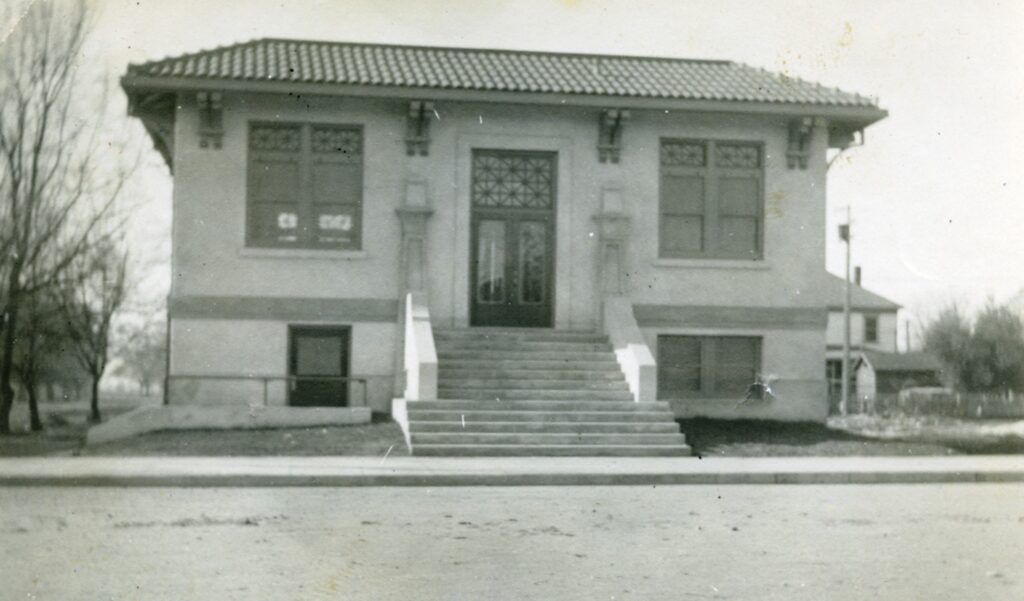
Carnegie Library Circa 1920
Copied from “Images of America – Gridley” with permission from the author.